


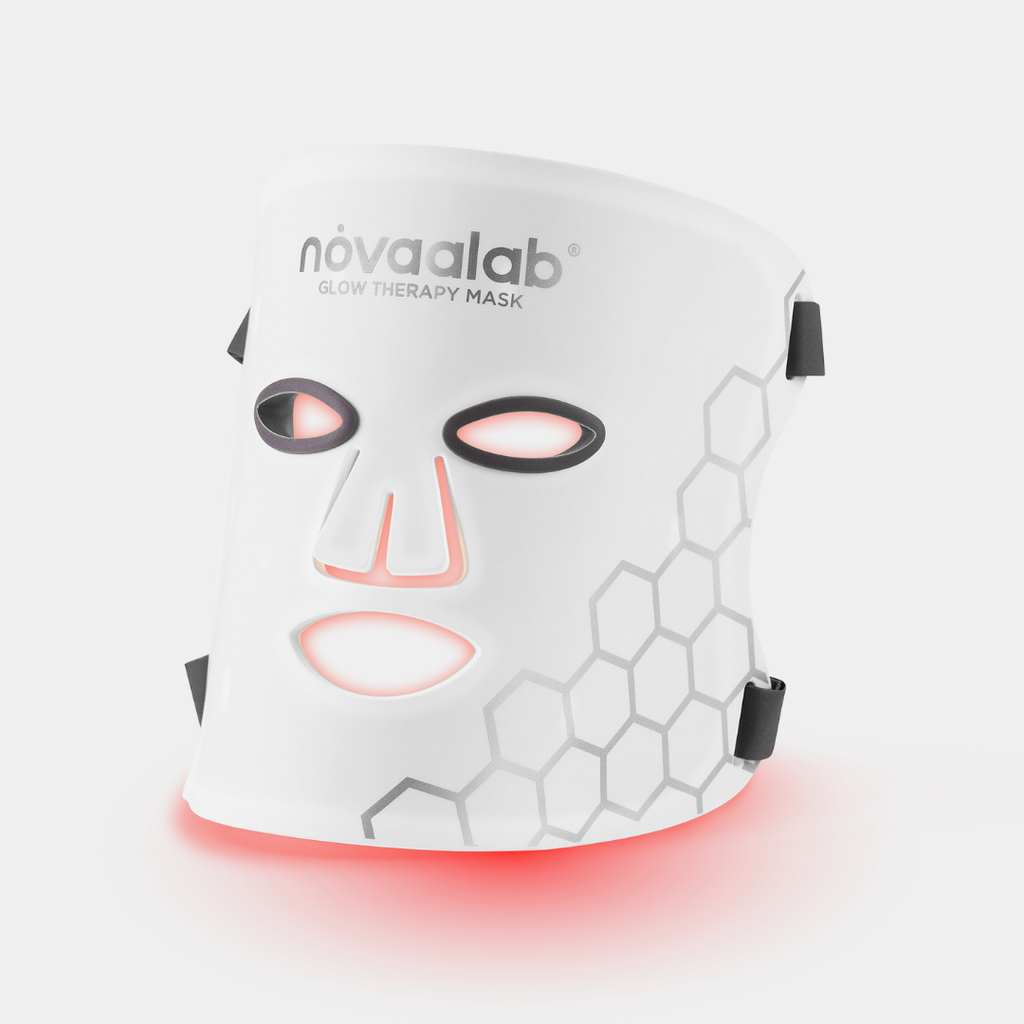


Red light therapy won't remove cellulite or burn fat, but it may make dimpling look less noticeable over time by supporting collagen production, skin firmness, and circulation in the skin above it.
Cellulite is a structural issue beneath the skin's surface, shaped by fat distribution, connective tissue, skin thickness, circulation, and inflammation. When fat beneath the skin pushes upward and the fibrous connective tissue bands pull downward, a dimpled appearance forms on the surface.
Because red light therapy primarily works within the skin layer (the dermis), it may help make cellulite less noticeable over time by supporting surface texture and tissue quality. However, it does not remove fat cells or break apart the fibrous connective tissue bands that structurally create cellulite dimpling.
Key takeaways rooted in research:
-
Red light therapy may support collagen production and smoother skin texture, which could make cellulite dimpling less noticeable over time. In human LED studies using 660 nm red light, researchers observed increased procollagen (a collagen precursor) in a skin-cell model and measurable reductions in skin surface roughness in people after multiple treatments.
-
LED phototherapy may help improve skin firmness, an important factor in how visible cellulite appears. Randomized controlled trials have shown histological increases in dermal collagen along with measurable improvements in skin texture and appearance after repeated LED treatments.
-
Red and near-infrared light may support circulation and microcirculation within skin and connective tissue. In a clinical study on skin microcirculation, low-level light therapy improved blood flow in small vessels, while broader photobiomodulation research suggests these circulation-related effects may help reduce tissue congestion and puffiness that can exaggerate uneven texture in cellulite-prone areas.
-
Some cellulite-specific research suggests LED photobiomodulation may improve the local tissue environment beneath the skin. In a recent randomized controlled trial, researchers observed changes in skin temperature and tissue sensitivity after treatment, although the study did not directly measure visible cellulite reduction or skin smoothness.
If your goal is gradual, non-invasive support for skin firmness, texture, and overall skin appearance quality, red light devices can be a reasonable at-home option. While red light therapy doesn't structurally remove cellulite or break apart the fibrous connective tissue bands beneath the skin, research suggests that red light therapy devices, which use clinically studied red and near-infrared wavelengths, may help improve collagen production, skin firmness, circulation, and tissue quality over time.

What Makes Cellulite So Noticeable?
Cellulite, known medically as gynoid lipodystrophy, affects an estimated 80–90% of women at some point, regardless of body weight or fitness level. And it's influenced by more than just body fat deposits. The visibility of cellulite depends on several overlapping structural and skin-related factors beneath the skin's surface, which is why cellulite can appear very different from person to person — even among people with similar body composition.
Several factors influence how noticeable cellulite appears on your skin's surface:
-
Skin thickness and firmness: Thinner or less firm skin shows underlying unevenness more easily.
-
Connective tissue structure: The fibrous "septa" under skin can pull down and create dimples.
-
Fat distribution and volume: Greater protrusion beneath the skin can make dimpling more visible.
-
Microcirculation and fluid dynamics: Tissue congestion or puffiness can exaggerate uneven texture.
Because cellulite involves multiple layers beneath the skin, different treatments target different aspects of the problem. Some procedures aim to structurally alter connective tissue or fat beneath the skin, while others focus more on improving skin quality and surface texture.
Most research relevant to cellulite comes from skin rejuvenation studies rather than cellulite-specific trials. But the same wavelengths used on facial skin are also used on body skin, and the main biological targets (collagen-making cells in the dermis) are the same.
That means the primary role of red light therapy in cellulite is skin support, helping the skin appear firmer, smoother, and more resilient, which may soften the appearance of uneven texture over time.
How Red Light Therapy May Help the Appearance of Cellulite
Although red light therapy doesn't structurally remove cellulite, it may help support some of the biological factors that influence how noticeable cellulite appears. Together, these mechanisms, listed in the following table, may help skin look firmer, smoother, and less uneven over time with consistent use.
| What Red Light Therapy May Support | What That May Mean for Cellulite Appearance |
|---|---|
| Collagen production and skin firmness | Skin may look firmer and thicker, making dimpling appear less noticeable. |
| Reduced collagen breakdown (lower MMP-1 in studies) | Skin may maintain structural support more effectively over time. |
| Surface texture and skin smoothness | Dimpled texture may appear softer and more even. |
| Circulation and microcirculation | Tissue may look less puffy or congested. |
| Tissue repair and cellular energy production | Skin may recover and maintain itself more effectively over time. |
Improves Skin Firmness and Texture
Cellulite often becomes more visible when skin loses firmness and structural support. Red light therapy primarily works within the skin layer (the dermis), where it may support collagen production and improve surface texture over time. While it does not remove cellulite structurally, firmer and smoother skin may help dimpling appear less noticeable. One of the biggest factors influencing how visible cellulite looks is the quality and firmness of the skin covering it.
Research suggests that by improving skin firmness and texture, red light therapy may help soften the appearance of uneven texture over time, especially when used consistently:
-
Research supporting this mechanism comes primarily from skin-rejuvenation studies. In a single-blinded split-face clinical study using 660 nm LED light, researchers observed increased procollagen and reduced MMP-1 (a collagen-degrading enzyme) in a reconstructed-skin model, along with measurable reductions in skin surface roughness in participants after 12 treatments.
-
Additional support comes from a randomized, placebo-controlled, double-blinded clinical trial on LED phototherapy, where researchers found histological increases in collagen within the dermis alongside visible improvements in skin texture and appearance.
Although these studies evaluated photoaged facial skin rather than cellulite directly, the same collagen-producing cells and dermal structures are present in body skin. The best-supported cellulite-relevant benefit of red light therapy is gradual improvement in skin firmness and texture, which may make cellulite less noticeable.
Supports Circulation and Tissue Oxygenation
Cellulite-prone tissue may also involve altered microcirculation, tissue congestion, and fluid retention, all of which can make uneven texture appear more noticeable. Near-infrared light in particular has been associated with improved microcirculation and blood flow within skin and connective tissue. These circulation-related effects may help support oxygen and nutrient delivery to tissue while reducing the "puffy" or congested appearance that can exaggerate cellulite texture.
Research suggests that supporting circulation and tissue oxygenation may help improve the overall appearance of cellulite-prone areas over time:
-
In a randomized controlled study on skin microcirculation, near-infrared light produced a measurable increase in microcirculatory blood flow in participants, supporting the idea that photobiomodulation can influence blood flow within skin and connective tissue.
-
Additional mechanistic support comes from a broader narrative review on red and near-infrared light therapy, which describes how light absorption may influence nitric oxide activity and blood-vessel responses that support blood flow and vascular perfusion in skin.
Although these studies were not conducted specifically on cellulite tissue, they help explain why some people notice treated areas look less congested, feel less puffy, or look a bit less blotchy, especially if they also use movement, hydration, or massage.
Supports Cellular Energy and Tissue Repair
Red and near-infrared light are absorbed by mitochondria, the energy-producing structures inside cells. This interaction is believed to help cells produce more usable energy while activating repair and regeneration processes within tissue. Because collagen-producing fibroblasts and skin cells require energy to maintain and repair tissue, this mechanism may help explain many of the downstream skin-support benefits associated with red light therapy.
Research suggests that the mitochondrial effects of photobiomodulation may help support skin repair and tissue maintenance:
-
A widely cited review on low-level light therapy describes how red and near-infrared light interact with cytochrome c oxidase in mitochondria, influencing ATP production, cellular signaling, and tissue-repair pathways.
-
Additional clinical support comes from a randomized controlled trial on LED phototherapy, where researchers observed increased collagen and elastic fibers, plus upregulation of TIMP-1 and TIMP-2 (which inhibit collagen-degrading enzymes) after repeated treatments, findings consistent with the broader theory that red light therapy may help support how skin repairs and rebuilds itself over time.
While ATP production itself doesn't result in a visible cosmetic outcome, this mechanism is considered one of the foundational biological processes behind photobiomodulation and may help support collagen production, circulation, and overall skin quality.

Does Red Light Therapy Work for Cellulite?
Research suggests that red light therapy may help improve the appearance of cellulite over time, primarily by supporting skin firmness, texture, circulation, and overall skin quality. However, the current evidence is stronger for skin-support benefits than for direct structural cellulite correction.
Most available research comes from broader skin-rejuvenation and photobiomodulation studies rather than large cellulite-specific clinical trials. The few cellulite-focused studies available suggest that red and near-infrared light may support tissue quality and the local tissue environment beneath the skin, but results tend to be gradual and modest rather than dramatic.
In practical terms, red light therapy is best viewed as a non-invasive skin-support treatment rather than a procedure designed to structurally remove cellulite.
How Red Light Therapy Compares to Other Cellulite Treatments
If you are comparing cellulite treatments, one of the most important questions is whether the treatment primarily targets skin quality or the deeper structural causes of cellulite.
| Treatment | What It Mainly Targets | Invasiveness | Evidence for Visible Cellulite Reduction | At-Home Use? | Best for |
|---|---|---|---|---|---|
| Red light therapy | Skin firmness / texture (collagen support) | Non-invasive | Moderate support for skin-quality improvements; limited direct cellulite-specific evidence | Yes; commonly used at home | Gradual skin support and smoothing |
| Radio frequency | Heat-driven tissue tightening; may affect deeper layers | Non-invasive | Generally stronger for cellulite appearance than light alone | Sometimes, though professional treatments are often stronger | More noticeable texture change without surgery |
| Ultrasound / cavitation | Deeper energy delivery; may target fat-related components | Non-invasive | May produce more noticeable changes in deeper tissue appearance | Some devices available, though results vary | People prioritizing deeper tissue change |
| Laser cellulite procedures | Fibrous bands + deeper structures | Invasive | Often strongest for structural cellulite | No; requires in-clinic treatment | More severe cellulite; willing to accept downtime / risks |
| Topical creams | Surface hydration and temporary tightening | Non-invasive | Usually modest / temporary | Yes | Short-term smoothing; maintenance |
Although it's not a direct substitute for treatments that mechanically or thermally target the connective tissue bands, red light therapy is often appealing because it is:
-
Non-invasive and generally well-tolerated
-
Compatible with other approaches (exercise, massage, topical skincare)
-
Better suited for gradual, consistent use rather than dramatic short-term correction
How to Use Red Light Therapy for Cellulite
If you decide to try red light therapy for cellulite-prone areas, the goal is to use it consistently enough to support gradual skin and tissue changes over time. Because collagen remodeling and skin-firming effects happen slowly, red light therapy is generally better suited for long-term skin support than rapid cellulite correction.
-
Wavelengths: Most research relevant to cellulite appearance uses a combination of red and near-infrared light because cellulite involves both skin quality and deeper tissue factors.
-
Red light (630–660 nm): Most associated with skin-related benefits like collagen production, skin firmness, and surface texture
-
Near-infrared light (810–850 nm): Penetrates deeper beneath the skin and is commonly used for broader photobiomodulation and tissue-support effects
-
-
Device type: Larger treatment areas like the thighs, hips, and buttocks are generally easier to treat with larger panels or flexible wraps/pads that can comfortably cover more surface area at once.
-
Irradiance (how much light energy reaches the tissue), session length, and dose: These factors work together to determine how much total light exposure the tissue receives over time. Unlike some medical photobiomodulation applications, there is not yet a universally standardized cellulite-treatment dose or irradiance protocol for red light therapy. Most available research instead supports moderate, repeated exposure over time rather than aggressive high-intensity sessions. In practice, red light therapy appears to work through gradual cumulative effects related to skin firmness, collagen support, and tissue quality. Consistency over weeks and months matters more than occasional longer sessions.
-
Dose: There is not yet a universally standardized cellulite-treatment dose for red light therapy, but most photobiomodulation research supports moderate, repeated exposure rather than aggressive high-intensity use.
-
Session length: Most at-home sessions last around 10 to 20 minutes per treatment area. Longer sessions are not necessarily better if the device already delivers adequate energy output.
-
-
Frequency: Regular use aligns best with how photobiomodulation is studied in skin and tissue-support research. Aim for approximately 3 to 5 sessions per week over at least 8 to 12 weeks before evaluating visible changes.
-
Distance and placement: You do not need perfect positioning for cellulite-related use. Consistent coverage of the area matters more than exact placement.
-
Distance: Panels are commonly used several inches away from the skin, while flexible pads are often placed directly against the body depending on device design.
-
Placement: Focus on consistent coverage over cellulite-prone areas like the thighs, hips, or buttocks rather than trying to target individual dimples.
-
-
What to pair it with: Red light therapy helps most when used alongside habits that also support circulation, muscle tone, and skin quality.
-
Lower-body strength training to improve muscle tone beneath cellulite-prone areas
-
Regular walking or movement to support circulation
-
Massage or similar techniques that may temporarily reduce puffiness or tissue stiffness
-
Moisturizers or skincare products that support hydration and smoother-looking skin
-
What Results Can You Expect from Red Light Therapy for Cellulite?
Red light therapy tends to produce gradual changes rather than dramatic or immediate cellulite reduction. Research suggests the most realistic improvements are usually related to skin quality, including smoother texture, firmer-feeling skin, and less noticeable unevenness over time.
Because red light therapy primarily supports collagen production, skin firmness, and tissue quality, results tend to build slowly with consistent use. A realistic timeline looks like:
-
Weeks 2–4: Skin may start to feel smoother or look more hydrated, especially when red light therapy is paired with consistent skincare and hydration habits.
-
Weeks 5–11: Some people begin noticing subtle texture changes, particularly in consistent lighting or when skin appears firmer and less crepey.
-
Weeks 12+: Firmer-skin effects and smoother texture may continue building with consistent use, especially when combined with habits that support circulation and muscle tone.
Several factors influence how noticeable results may be:
-
Baseline skin firmness and thickness
-
Degree of cellulite severity
-
Consistency of treatment
-
Device quality and coverage area
-
Lifestyle factors like hydration, movement, and muscle tone
What this means in practice: Most people should expect gradual cosmetic improvement rather than structural cellulite removal. Red light therapy is generally better suited for improving how skin looks and feels over time than for dramatically altering the deeper connective tissue structures responsible for cellulite dimpling.
Takeaway: The most realistic outcome from red light therapy for cellulite is gradual improvement in skin texture, firmness, and overall skin quality, not complete cellulite removal.
Is Red Light Therapy Safe to Use for Cellulite?
Red light therapy is generally considered low risk when used as directed. It does not use ultraviolet (UV) light and is not intended to damage skin tissue the way some resurfacing or heat-based treatments do.
-
Use extra caution or ask a healthcare professional first if you:
-
Are pregnant
-
Have a condition associated with photosensitivity
-
Take medications that increase light sensitivity
-
Have an active skin infection, rash, or open wound in the treatment area
-
Have a medical condition where light exposure is restricted
-
-
Be mindful when combining treatments. Many people using red light therapy for cellulite are also using skincare products, massage tools, or other cosmetic treatments. In general, red light therapy is often combined with supportive routines, but it is smart to use extra caution when pairing it with treatments that already increase skin sensitivity or irritation. Examples include:
-
Strong exfoliating acids
-
Prescription retinoids
-
Heat-based body treatments
-
Aggressive scrubbing or exfoliation
-
Recently treated or irritated skin
-
-
If your skin becomes irritated, sensitive, or unusually reactive, reduce the intensity or frequency of overlapping treatments and allow the skin barrier time to recover.
-
Remember eye safety: Avoid shining red or near-infrared light directly into your eyes. Use eye protection if recommended by the device manufacturer.
Most people can use red light therapy safely at home, but photosensitivity, medication use, and combining multiple aggressive treatments are the main reasons to use extra caution or speak with a healthcare professional first.
What to Look for in a Red Light Therapy Device for Cellulite
If you're using red light therapy at home for cellulite-prone areas, the goal is to support gradual improvements in skin firmness, texture, and tissue quality over time. In practice, the best device is usually the one that makes consistent treatment realistic, especially for larger areas like the thighs, hips, and buttocks.
When choosing a device, consider the following:
-
Dual-wavelength output matters for cellulite-related goals. Most research relevant to cellulite appearance involves both red and near-infrared light because cellulite affects both the skin layer and the tissue beneath it. Devices that include both wavelength ranges are generally more versatile than single-wavelength options because they support multiple tissue layers at once.
-
Red light (630–660 nm): Most associated with collagen production, skin firmness, and smoother surface texture.
-
Near-infrared light (810–850 nm): Penetrates deeper beneath the skin and is commonly used for broader tissue-support and photobiomodulation effects.
-
-
Coverage matters more than precision. Cellulite usually affects larger body areas rather than isolated spots. Devices that can comfortably cover the thighs, hips, or buttocks in a practical amount of time are easier to use consistently than small spot-treatment devices that require constant repositioning.
-
Output affects how practical sessions feel. Higher-output devices can make it easier to complete sessions in a reasonable amount of time, while lower-output devices may require longer or more frequent sessions to deliver similar exposure over larger treatment areas.
-
The device format should match the treatment area. Flexible wraps or pad-style devices are often more practical for curved or larger areas because they can sit comfortably against the skin without needing constant adjustment. Larger panels may work well for broader treatment sessions, especially when treating multiple areas at once.
-
Consistency matters more than "perfect" sessions. Research on photobiomodulation generally aligns best with repeated use over time rather than occasional high-intensity sessions. A device that fits naturally into your routine is usually more useful than one with complicated setup or positioning requirements.
How NovaaLab Devices Fit into a Cellulite Routine
NovaaLab devices are designed around commonly studied photobiomodulation wavelengths, including 660 nm red light and 850 nm near-infrared light, which are frequently used in skin and tissue-support research.
For cellulite-prone areas, larger-format devices and flexible pad-style designs can make it easier to consistently treat broader areas like the thighs, hips, and buttocks without turning sessions into a long, complicated routine.
-
For larger treatment areas: Flexible pad-style devices, like the Novaa Light Pad, are often practical because they can comfortably cover curved body areas and allow more consistent full-area exposure.
-
For targeted areas or smaller zones: More compact devices, like the Novaa Light Switch, may work better for smaller treatment regions or more focused sessions.
-
For broader full-body support: Larger-format NovaaLab red light therapy devices can make it easier to treat multiple areas consistently several times per week, which better aligns with how red light therapy is typically used in research.
Takeaway: For cellulite-related goals, the most important factor is usually consistency rather than aggressive treatment intensity. The best red light therapy device is typically the one that makes regular, full-area treatment realistic enough to maintain over weeks and months.
Try Red Light Therapy for Cellulite at Home
For people looking for a gradual, non-invasive approach with minimal downtime, red light therapy may still be worthwhile, especially when paired with habits that support skin quality and circulation, like strength training and regular movement. The most realistic outcome is gradual improvement in skin texture and firmness rather than dramatic cellulite removal.
Devices designed around commonly studied wavelengths, including 660 nm red light and 850 nm near-infrared light, like those from NovaaLab, are built to support consistent at-home use across larger treatment areas like the thighs and hips. Features like flexible pads and broader coverage options can also make it easier to maintain the kind of long-term routine that best aligns with how red light therapy is studied in skin-support research.



Leave a comment